Parameter |
Unit |
OBT20 Simple Cycle |
OBT20R Recuperated Cycle |
Product Model |
|
OBT20 |
OBT20R |
Electrical Power Output |
kW |
20 |
17 |
Electrical Efficiency |
% |
12 |
23 |
Output Voltage |
VAC |
400-480 |
400-480 |
Output Frequency |
Hz |
50 |
50 |
Electrical Service |
- |
3-phase, 4-wire |
3-phase, 4-wire |
Fuel Input |
Mj/h |
537 |
255 |
Fuel Inlet Pressure |
bar(g) |
4-5 |
4-5 |
Exhaust Gas Flow |
kg/h |
720 |
720 |
Exhaust Gas Temperature |
℃ |
570 |
257 |
> Performance notice: The values above are taken from the supplied product sheet. Site output, efficiency, fuel input, and exhaust conditions may change with altitude, ambient temperature, fuel composition, inlet and exhaust pressure losses, and balance-of-plant design.
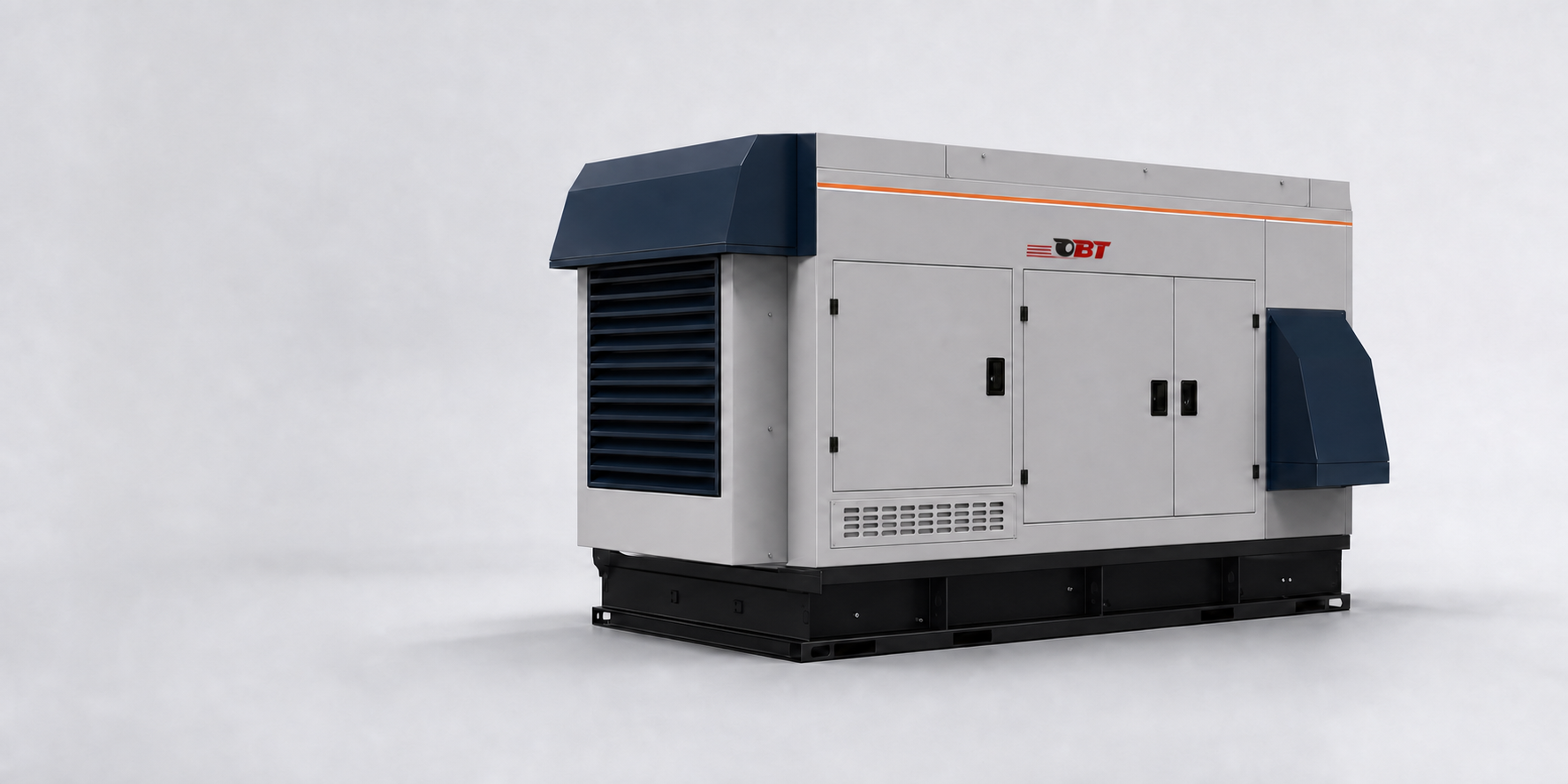
The OBT20 is a compact micro gas turbine developed for distributed power generation, combined cooling, heating and power, and multi-fuel energy utilization. The series includes two configurations: the OBT20 simple-cycle model delivers 20 kW of electrical output and is suited to projects that can benefit from high-temperature exhaust heat, while the OBT20R recuperated model delivers 17 kW at 23% electrical efficiency for applications where fuel economy is a priority.
Built around a high-speed integrated generator and a modular architecture, the OBT20 combines a small footprint with flexible system integration. It can be engineered for natural gas, associated petroleum gas, biomass gas, diesel, and selected hydrogen, ammonia, or alcohol-based fuel applications. When connected to heat-recovery equipment, the turbine can become the power core of a CCHP system supplying electricity, useful heat, and cooling.
OBT20 simple cycle: Delivers 20 kW of electrical power with an exhaust temperature of 570℃. The high-temperature exhaust provides a useful heat source for steam, hot-water, process-heating, or other heat-recovery systems.
OBT20R recuperated cycle: Delivers 17 kW at 23% electrical efficiency, with a stated fuel input of 255 MJ/h and an exhaust temperature of 257℃. It is well suited to projects focused on electrical efficiency and lower fuel consumption.
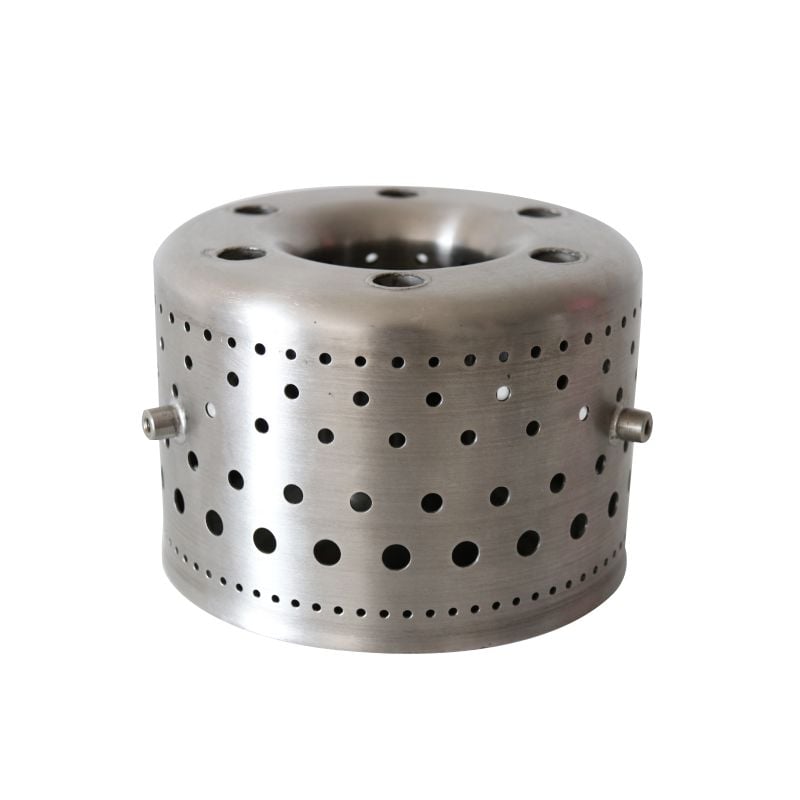
The combustion system can be configured for different operating and fuel conditions. Potential fuels include natural gas, associated gas, biomass gas, diesel, hydrogen, ammonia, and alcohol-based fuels. The allowable composition, heating-value range, blending ratio, gas-cleaning requirements, and emissions performance must be confirmed from a representative fuel analysis.
A micro gas turbine has fewer moving parts than many conventional reciprocating power systems, helping reduce mechanical complexity and potential failure points. An advanced control and monitoring system supports active operating optimization, one-touch start and stop, wide-range power adjustment, and multiple operating modes for changing site loads and grid conditions.
The high-speed integrated generator provides a high power-to-size ratio. Modular manufacturing helps reduce site work and shorten installation schedules. A project can use a single OBT20 or a multi-unit arrangement, allowing capacity to be added in stages as demand grows.
Low-emission combustion technology is designed to reduce NOx emissions. The OBT20 can also help convert associated gas, biomass-derived gas, and other available fuels into useful electricity and heat instead of allowing their energy value to be wasted. Hydrogen blending and other clean-fuel applications may be evaluated when the fuel specification and project safety requirements are satisfied.
The OBT20 can serve as the generating unit in a compact combined cooling, heating and power system. When paired with a heat exchanger, heat-recovery unit, or absorption chiller, it can support electricity, domestic hot water, process heat, or cooling demand from a single fuel source. Its modular design is particularly useful for data centers, hospitals, hotels, campuses, and commercial facilities that require phased capacity expansion.
Chemical, steel, and other industrial facilities may be able to use suitable combustible off-gases for distributed power and heat recovery. Before use, the gas must be evaluated for heating value, pressure, moisture, particulates, tar, sulfur compounds, and composition variability. Appropriate gas cleaning and conditioning equipment should be included in the system design.
At oil and gas production sites where pipeline access is limited, the OBT20 can convert conditioned associated gas into local electricity for field equipment, instrumentation, and auxiliary systems. Recovering the exhaust heat can further increase the value obtained from the available fuel.
Its compact size and high power density make the OBT20 suitable for feasibility studies involving unmanned aerial vehicles, marine systems, and other specialized power applications. These installations require dedicated engineering for weight, vibration, air intake, exhaust routing, controls, safety, and environmental conditions.
Choose the OBT20 simple-cycle model when maximum electrical output or high-temperature exhaust heat is the main priority. Its 570℃ exhaust can support higher-grade heat-recovery applications.
Choose the OBT20R recuperated model when electrical efficiency and fuel economy are more important. Its 23% electrical efficiency and lower fuel input make it attractive for applications with long operating hours and limited high-temperature heat demand.
Final selection should consider the electrical load profile, thermal demand, annual operating hours, fuel price, utility tariff, grid connection, and expected return on investment.
Frequently Asked Questions
The OBT20 series includes two models. The OBT20 simple-cycle unit delivers 20 kW, while the OBT20R recuperated unit delivers 17 kW at a higher electrical efficiency of 23%. Selection should be based on the complete energy balance, not rated power alone.
The supplied product information identifies natural gas, associated gas, biomass gas, diesel, hydrogen, ammonia, and alcohol-based fuels as potential options. Actual compatibility and allowable blending ratios depend on fuel analysis, fuel conditioning, combustor configuration, emissions requirements, and project safety standards.
Yes. Its exhaust can be connected to heat-recovery and cooling equipment to produce useful heat, hot water, steam, or chilled water. The simple-cycle and recuperated models have different exhaust temperatures, so the balance-of-plant equipment must be designed for the selected model.
The modular architecture allows multi-unit configurations to be evaluated for larger or variable loads. The electrical system, control logic, redundancy strategy, and grid-protection scheme must be engineered for each project.
Our professional sales team are waiting for your consultation.
 EN
EN
 AR
AR
 BG
BG
 HR
HR
 CS
CS
 DA
DA
 NL
NL
 FI
FI
 FR
FR
 DE
DE
 EL
EL
 HI
HI
 IT
IT
 JA
JA
 KO
KO
 NO
NO
 PL
PL
 PT
PT
 RO
RO
 RU
RU
 ES
ES
 SV
SV
 TL
TL
 IW
IW
 LV
LV
 LT
LT
 SR
SR
 SK
SK
 SL
SL
 UK
UK
 VI
VI
 ET
ET
 HU
HU
 TH
TH
 TR
TR
 AF
AF
 MS
MS
 GA
GA
 IS
IS
 LA
LA