Parameter |
Unit |
OBT150 Simple Cycle |
OBT150R Recuperated Cycle |
Product Model |
|
OBT150 |
OBT150R |
Electrical Power Output |
kW |
151.8 |
129.9 |
Electrical Efficiency |
% |
16.7 |
30.5 |
Output Voltage |
VAC |
400-480 |
400-480 |
Output Frequency |
Hz |
50 |
50 |
Electrical Service |
- |
3-phase, 4-wire |
3-phase, 4-wire |
Fuel Input |
Mj/h |
3,265 |
1,533 |
Fuel Inlet Pressure |
bar(g) |
4-5 |
4-5 |
Exhaust Gas Flow |
kg/h |
4,094 |
4,059 |
Exhaust Gas Temperature |
℃ |
610 |
250 |
Steam Production |
kg/h |
880 at 0.8 MPa |
200 at 0.2 MPa |
Cooling Capacity |
kW |
815 |
155 |
Package Dimensions |
mm |
1,650*2,150*2,135 |
1,650*2,150*2,700 |
> Performance notice: Technical data is based on the supplied product sheet and package dimensions provided by the customer. The test boundaries for electrical, steam, and cooling performance should be confirmed during technical consultation. Actual performance may vary with fuel, ambient conditions, and balance-of-plant configuration.
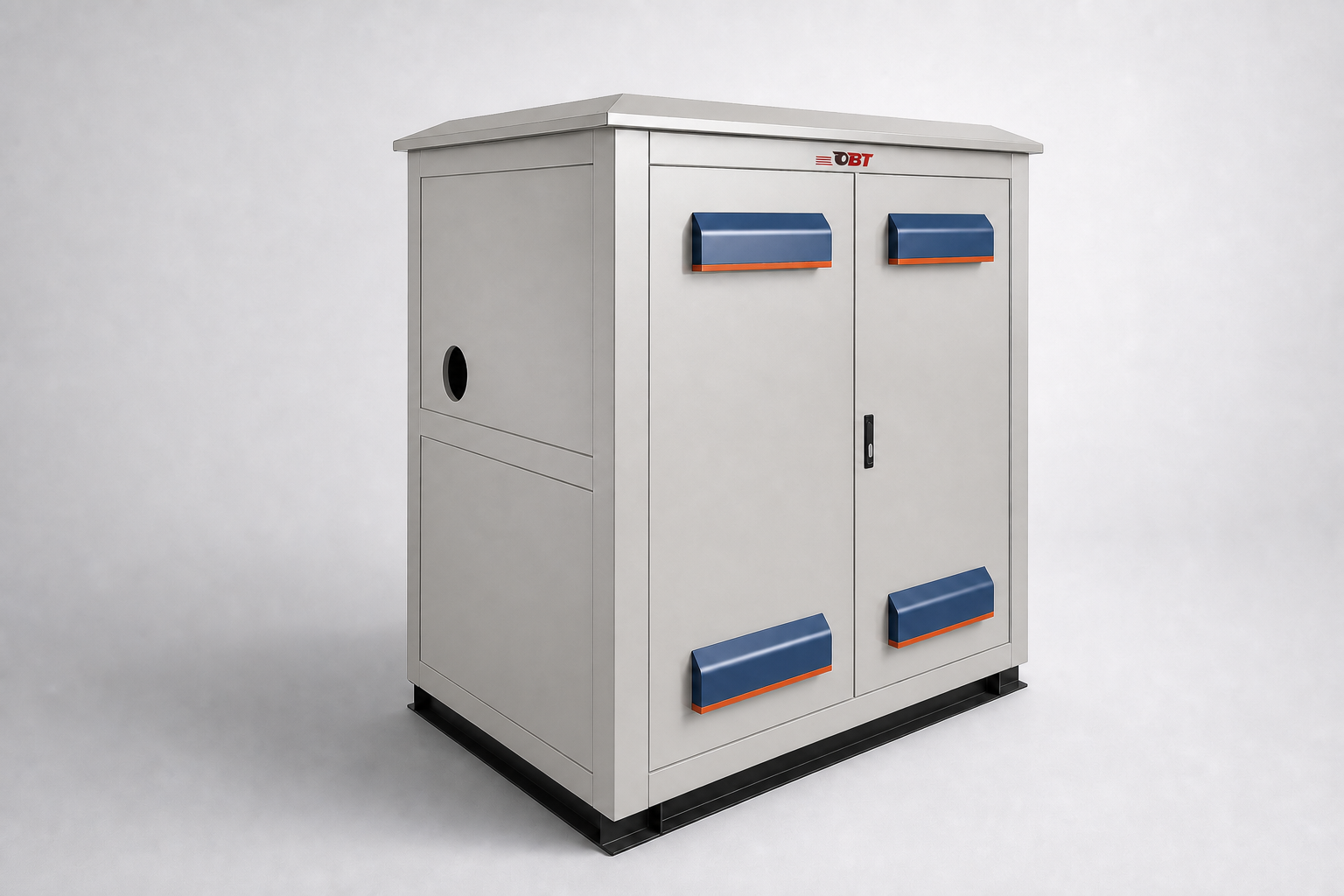
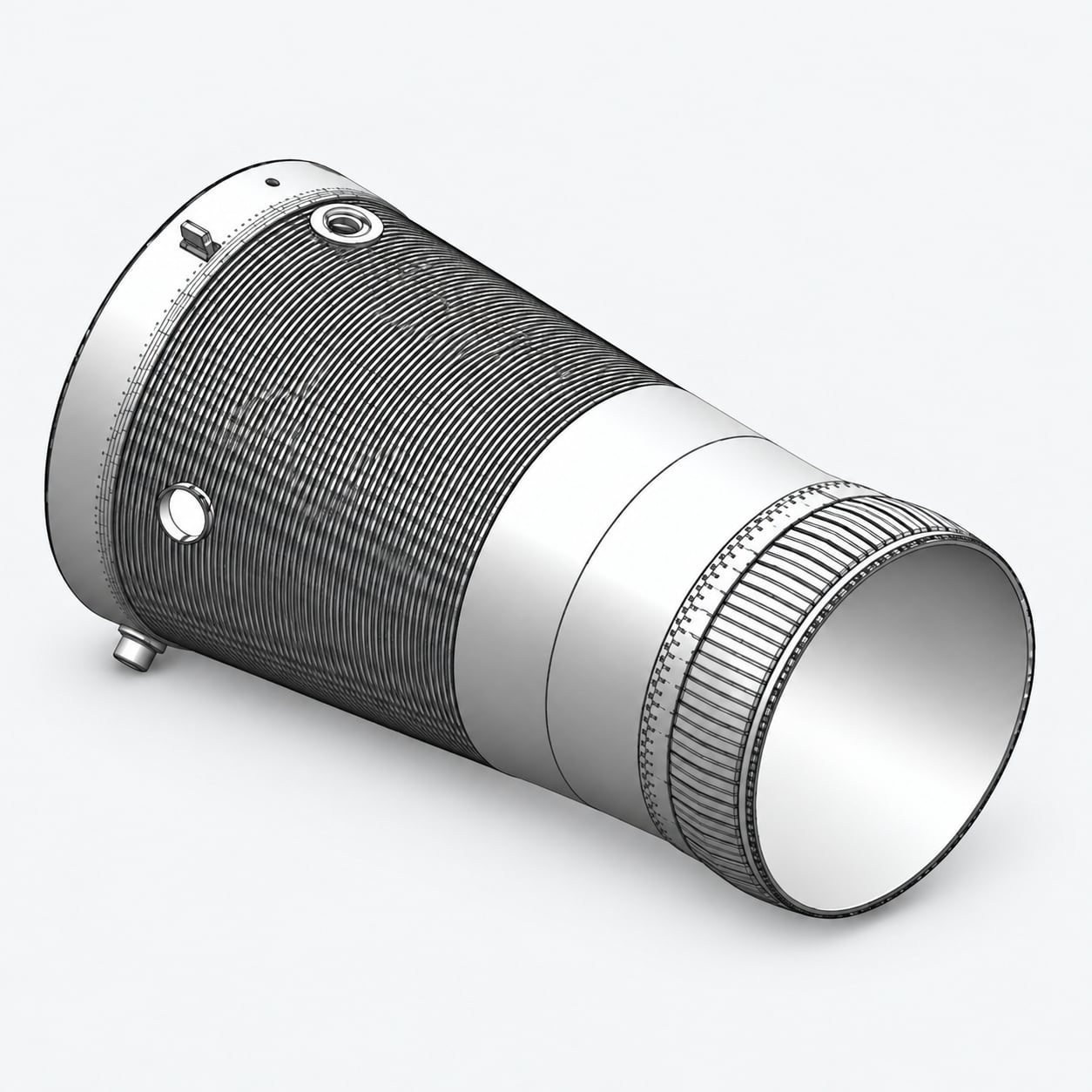
The OBT150 is a skid-mounted micro gas turbine developed for industrial and commercial distributed energy projects. It is available in two configurations: the OBT150 simple-cycle model delivers 151.8 kW of electrical power and produces high-temperature exhaust suitable for steam or cooling applications, while the OBT150R recuperated model delivers 129.9 kW at 30.5% electrical efficiency for continuous-duty projects focused on fuel economy.
The compact package can integrate turbine controls, monitoring, and auxiliary systems to reduce field interfaces and shorten site installation. Typical applications include natural-gas distributed power, CCHP for data centers and hospitals, combustible off-gas utilization in chemical and steel facilities, and on-site power generation from oilfield associated gas.
The OBT150 can provide more than electricity. With properly designed heat-recovery equipment, the exhaust can support steam production, process heating, hot water, or absorption cooling. The supplied product data lists a steam output of 880 kg/h at 0.8 MPa and a cooling capacity of 815 kW for the OBT150. For the OBT150R, the listed values are 200 kg/h at 0.2 MPa and 155 kW of cooling capacity.
This makes the OBT150 a strong candidate for facilities with simultaneous electrical and thermal demand. Actual steam and cooling performance depends on the selected heat-recovery system, operating conditions, and project energy balance.
The OBT150R uses a recuperated cycle to improve electrical efficiency. It delivers 129.9 kW at a stated electrical efficiency of 30.5%, with a fuel input of 1,533 MJ/h and an exhaust temperature of 250°C. This configuration is particularly relevant to continuous-duty applications with stable electrical loads and high fuel costs.
The OBT150 simple-cycle model delivers 151.8 kW of electrical power with an exhaust temperature of 610°C and an exhaust flow of 4,094 kg/h. This high-grade heat source can be engineered for steam production, process heating, hot water, or absorption cooling. The recovery system should be selected according to the required temperature, pressure, return-water conditions, and operating profile.
Potential fuel options include natural gas, associated petroleum gas, biomass gas, diesel, hydrogen, ammonia, and alcohol-based fuels. Industrial off-gas and low-heating-value gas projects require detailed evaluation of fuel composition, heating-value variation, contaminants, supply pressure, and gas-conditioning requirements.
Modular skid construction reduces field assembly and supports faster project deployment. The package dimensions are:
- OBT150 simple-cycle package: 1,650 mm wide × 2,150 mm high × 2,135 mm long
- OBT150R recuperated package: 1,650 mm wide × 2,150 mm high × 2,700 mm long
These values describe the equipment envelope only. Additional space is required for ventilation, maintenance access, intake and exhaust systems, fuel conditioning, electrical equipment, and applicable safety clearances.
The turbine uses advanced control and monitoring functions for active operating optimization, one-touch start and stop, wide-range power adjustment, and multiple operating modes. Projects requiring higher capacity or redundancy can evaluate multi-unit layouts with staged expansion, load sharing, and maintenance standby.
The OBT150 can be deployed at sites with continuous electricity, heating, or cooling demand, including industrial parks, data centers, hospitals, hotels, campuses, and commercial buildings. It can operate alongside the utility grid, boilers, chillers, and energy-storage systems to reduce peak demand and improve energy resilience.
Suitable combustible process gas can be conditioned and used for on-site power generation and heat recovery. This approach converts available fuel energy into electricity, steam, or cooling for plant use. A project-specific gas analysis is essential because particulates, sulfur, moisture, tar, and rapid changes in heating value may require dedicated treatment equipment.
At oilfields where gas export is difficult or expensive, the OBT150 can form the core of a skid-mounted power system using conditioned associated gas. The generated electricity can supply production, gathering, pumping, and auxiliary loads. Hazardous-area classification, gas conditioning, environmental protection, remote monitoring, and fire-safety requirements must be addressed in the final design.
Facilities that require continuous electricity and year-round cooling can use the OBT150 with an absorption chiller or other heat-recovery equipment. The system can improve overall fuel utilization by converting exhaust energy into useful cooling or heat instead of rejecting it to the atmosphere.
When the project load exceeds one unit or requires N+1 redundancy, multiple OBT150 packages can be evaluated in parallel. A modular arrangement makes it possible to add capacity in phases and use coordinated controls for load sharing, peak support, unit rotation, and maintenance reserve.
Select the OBT150 Simple-Cycle Model When:
- Higher electrical output is required;
- The project has stable demand for high-pressure steam or high-grade process heat;
- The 610°C exhaust can be used effectively;
- High cooling output is required through a suitable heat-driven cooling system.
Select the OBT150R Recuperated Model When:
- The system will operate for long annual hours;
- Fuel cost is a major economic factor;
- Higher electrical efficiency is more valuable than high-temperature exhaust;
- The site has moderate or lower-temperature heat demand.
A final decision should be based on an annual hourly-load model that includes fuel price, electricity tariffs, heat and cooling value, maintenance cost, availability, and project life-cycle economics.
To prepare a reliable OBT150 proposal, please provide:
1. Current and projected electrical, heating, and cooling loads;
2. Annual operating hours and load variation;
3. Grid-connected, off-grid, or grid-islanding requirements;
4. Fuel composition, lower heating value, pressure, temperature, flow, and contaminants;
5. Required steam pressure and flow or cooling-water conditions;
6. Site altitude, temperature range, emissions limits, and noise limits;
7. Installation area, transport access, lifting conditions, and package interfaces;
8. Hazardous-area, fire-protection, remote-control, and redundancy requirements.
The series includes two configurations. The OBT150 simple-cycle model delivers 151.8 kW, while the OBT150R recuperated model delivers 129.9 kW. The OBT150R has lower rated output but increases electrical efficiency from 16.7% to 30.5%.
The OBT150 simple-cycle package measures 1,650 mm wide × 2,150 mm high × 2,135 mm long. The OBT150R recuperated package has the same width and height but is 2,700 mm long. Additional space must be reserved for service access, ventilation, fuel systems, and intake and exhaust equipment.
These fuels can be evaluated, but direct use cannot be confirmed without representative fuel data. Associated gas and industrial off-gas may contain moisture, sulfur, particulates, or tar and may vary significantly in heating value. Filtration, dehydration, desulfurization, pressure regulation, or other treatment may be required.
For electrical efficiency alone, the OBT150R recuperated model is higher at 30.5%, compared with 16.7% for the OBT150 simple-cycle model. If the site can fully use the OBT150's high-temperature exhaust for steam or cooling, overall system efficiency must be evaluated rather than electrical efficiency alone.
The supplied product information identifies hydrogen blending and other clean-fuel applications as development and project-adaptation options. The allowable hydrogen ratio, fuel pressure, emissions performance, material compatibility, and safety systems must be confirmed for the specific project.
Our professional sales team are waiting for your consultation.
 EN
EN
 AR
AR
 BG
BG
 HR
HR
 CS
CS
 DA
DA
 NL
NL
 FI
FI
 FR
FR
 DE
DE
 EL
EL
 HI
HI
 IT
IT
 JA
JA
 KO
KO
 NO
NO
 PL
PL
 PT
PT
 RO
RO
 RU
RU
 ES
ES
 SV
SV
 TL
TL
 IW
IW
 LV
LV
 LT
LT
 SR
SR
 SK
SK
 SL
SL
 UK
UK
 VI
VI
 ET
ET
 HU
HU
 TH
TH
 TR
TR
 AF
AF
 MS
MS
 GA
GA
 IS
IS
 LA
LA